top of page

Incarnations

Throughout Tibetan Buddhist traditions, enlightened masters have preserved and transmitted teachings through successive incarnations.
 

The lineage of Lagon Drubthob Nyangnyon is preserved through a succession of realized masters, carrying forward the wisdom, compassion, and blessings of Buddha and Tara.
 

This page presents the successive incarnations of the Lagon lineage and their lives, contributions, and role in continuing these teachings.

Drubthob Lagon Nyagnyon

1st Incarnation

According to the traditional lineage, Drubthob Nyagnyon (Nyakre Sewo) is regarded as a mind emanation of Guru Padmasambhava (Guru Rinpoche). In Tibetan Buddhism, enlightened masters may manifest as the body, speech, or mind emanation of a great master. Lagon Tulku is recognized as Guru Rinpoche’s mind emanation, embodying the enlightened wisdom and awakened mind of Guru Rinpoche.

IMG-20260702-WA0007.jpg


So far, from the 11th century until today, Lagon Tulku Nyagnyon  is credited with founding 108 monasteries and temples throughout Tibet. According to the historical accounts, he traveled on foot across Tibet, spreading the Dharma and establishing places of practice. One of his most well-known temples is the Tara Chapel inside the Jokhang Temple in Lhasa. Another famous monastery is his main monastery in eastern Tibet. It is very ancient and still stands today, serving as a living testimony to his extraordinary life and activity.


There is also another important point about the Lagon lineage. According to many respected Tibetan masters and ancient biographies, the first Lagon was an emanation connected with Guru Rinpoche. These accounts appear in several traditional Tibetan texts.

Interestingly, the old biographies also say that for many centuries Lagon would not be born on this planet, but in another realm or world. When we consider that nearly 900 years passed, this makes sense within the traditional understanding of rebirth, since a human life is relatively short. The texts describe that after many centuries in another realm, Lagon would again take birth in Nepal, which is the present incarnation.


The biographies also say that Lagon  was a great artist, poet, and visionary. He was believed to have the ability to foresee future events. Nearly a thousand years ago, he predicted that Tibet would lose its country, monasteries would be destroyed, and many people would suffer and die. Looking back now, many of those prophecies appear to have come true.


He also made predictions about the future and about his own future births. The texts say that he would be born twice in India, and they describe many details surrounding those lives.

Today, more than nine centuries after the lifetime of Drubthob Lagon Nyagnyon (Nyakre Sewo), his story continues to live on in the heart of Lhasa.


Standing before the ancient Jokhang Temple, visitors can still see the great stone pillar associated in Tibetan tradition with Drubthob Lagon Nyagnyon’s victory. The pillar remains in front of the temple, bearing inscriptions in both Tibetan and Chinese that recount its history and significance.

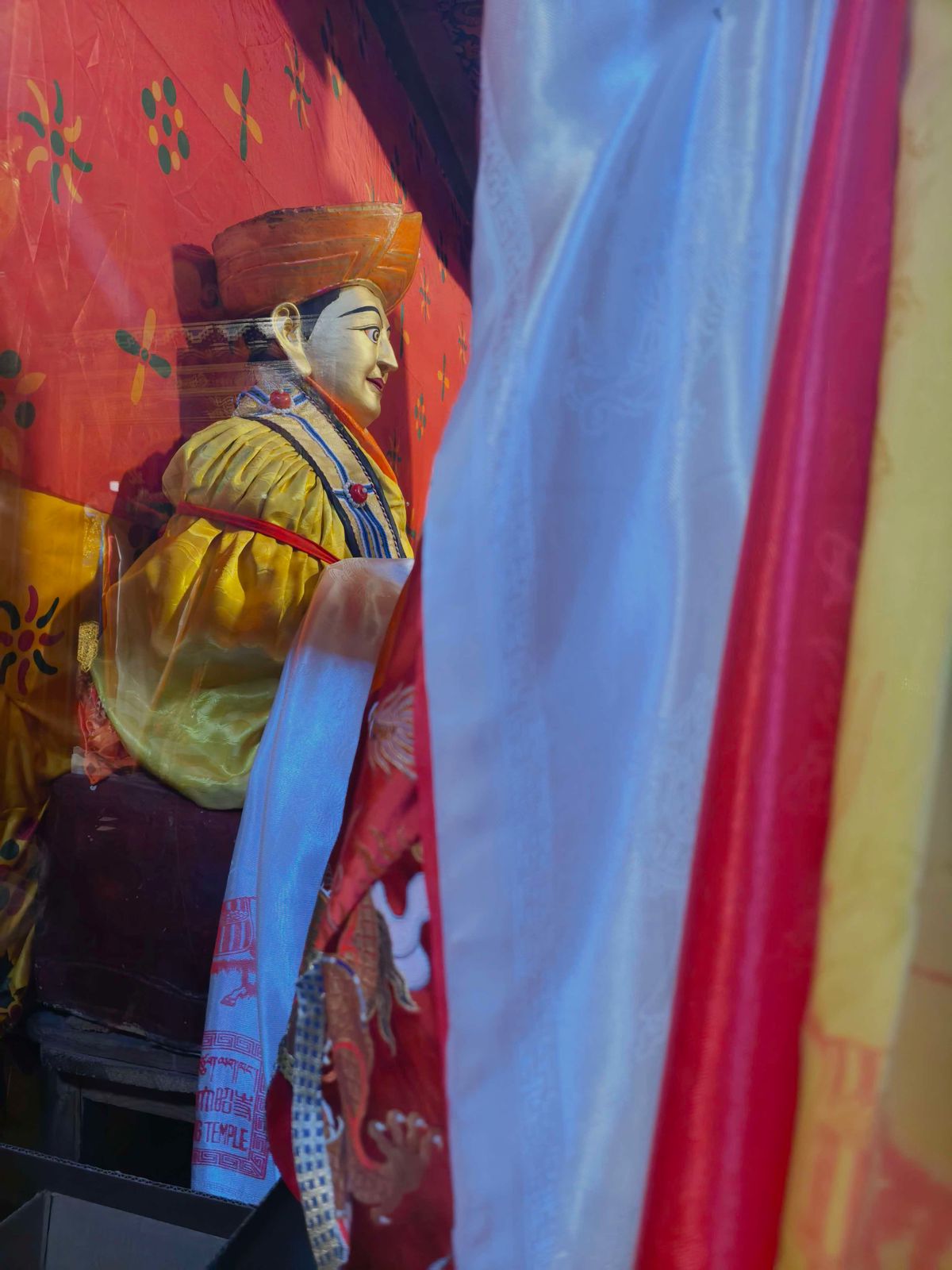
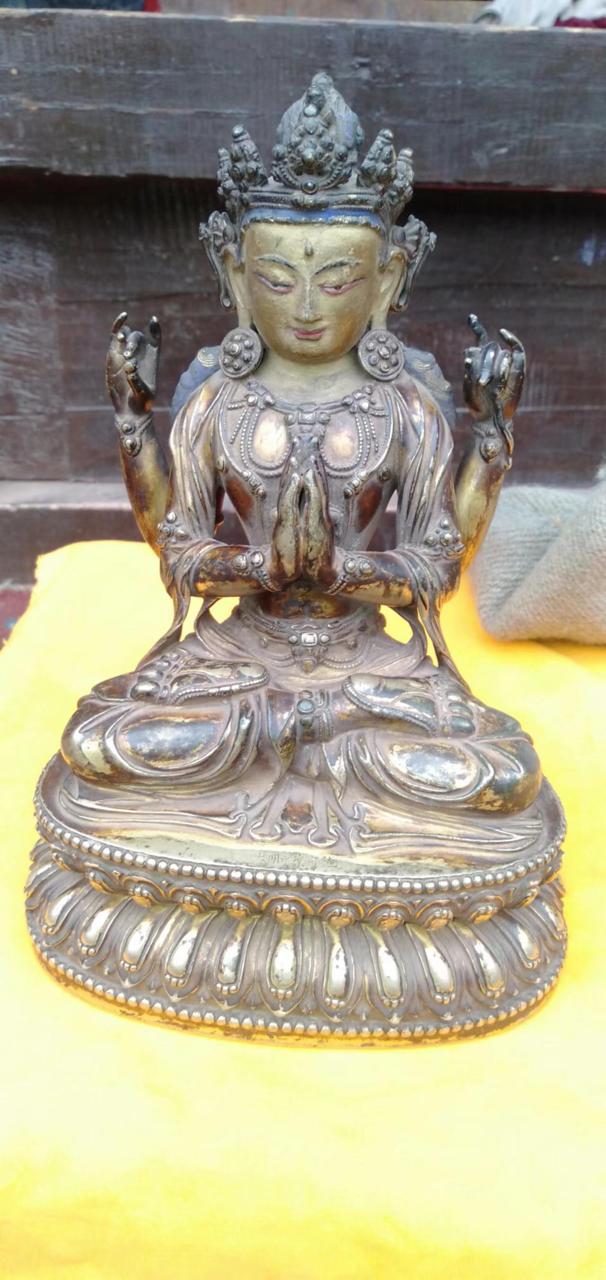
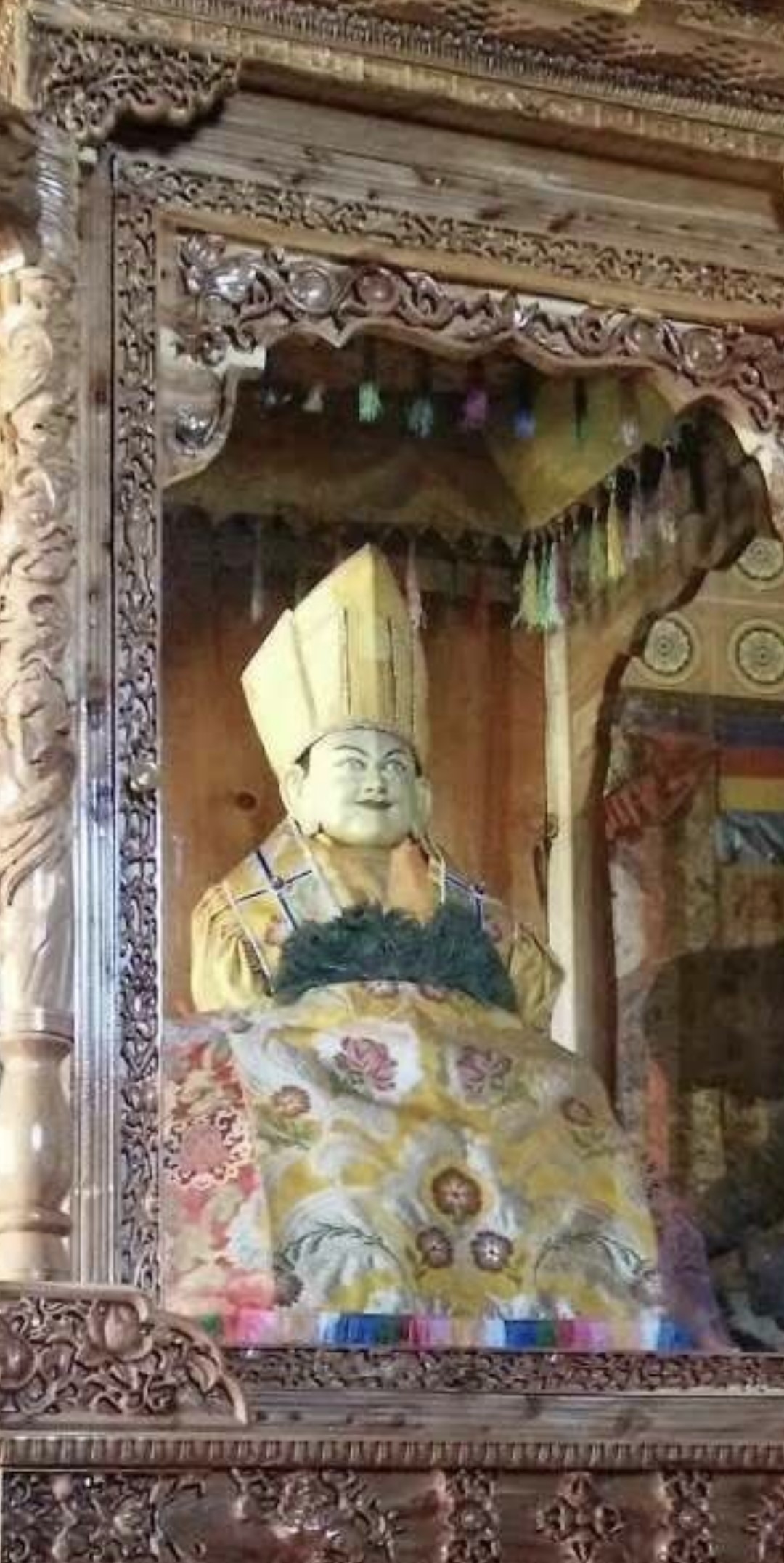
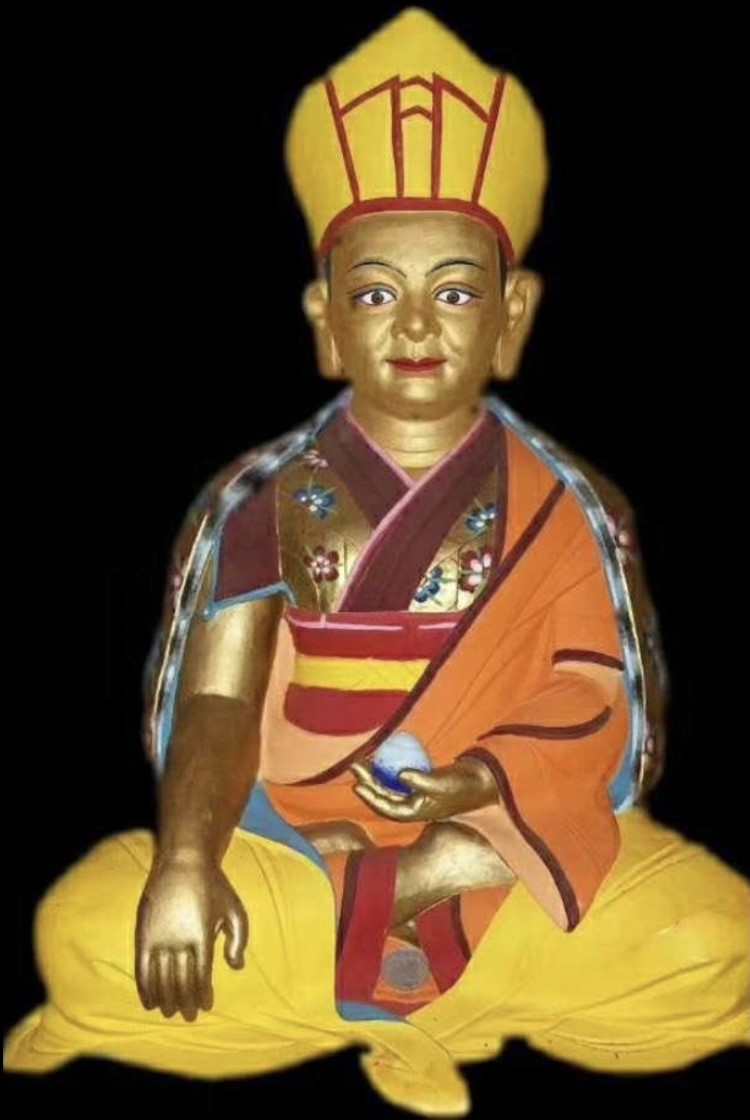
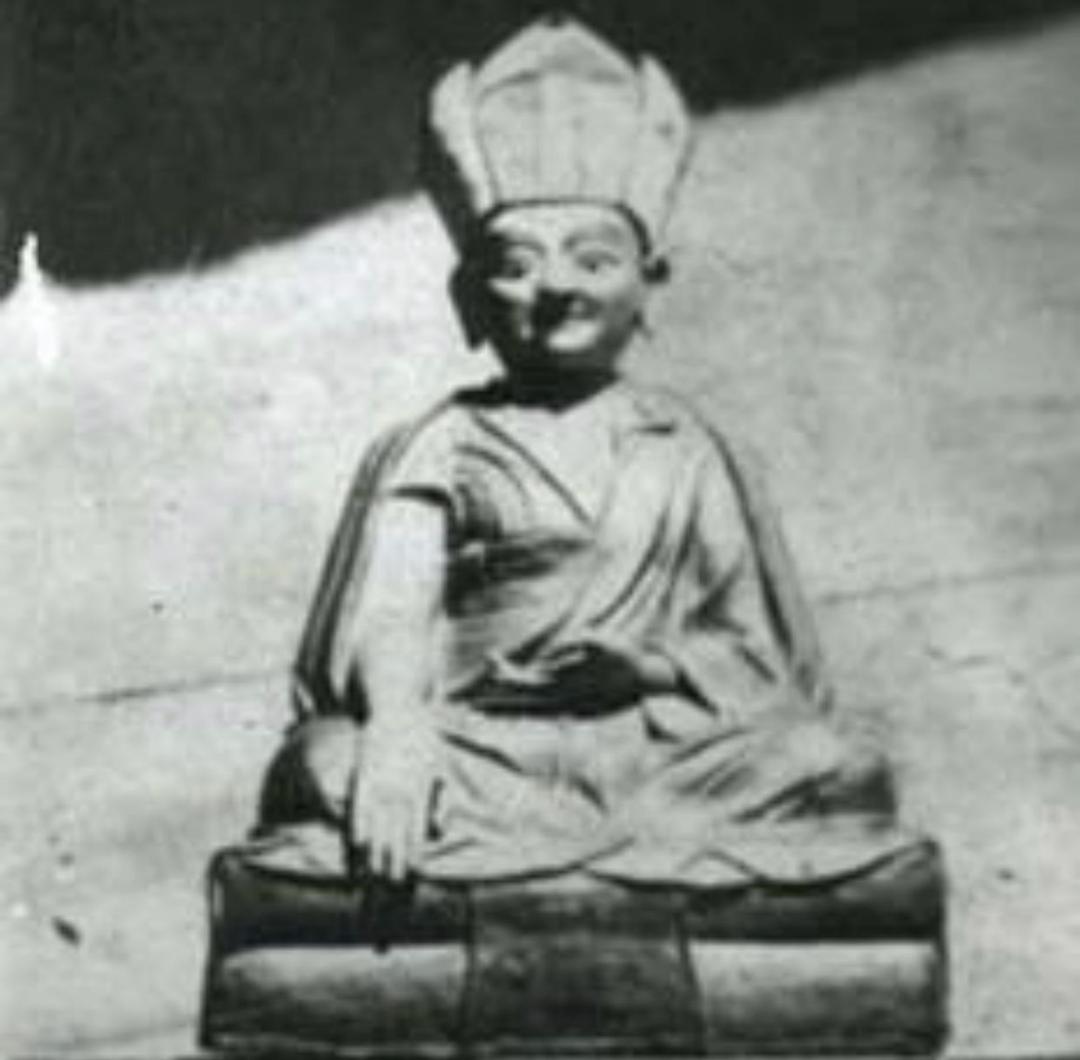
this is a statue of Lagon Tulku Nyagnyon, located in one of the Lagon monasteries in Tibet.

this is a statue of Lagon Tulku Nyagnyon  (shown above), located in one of the Lagon monasteries in Tibet.

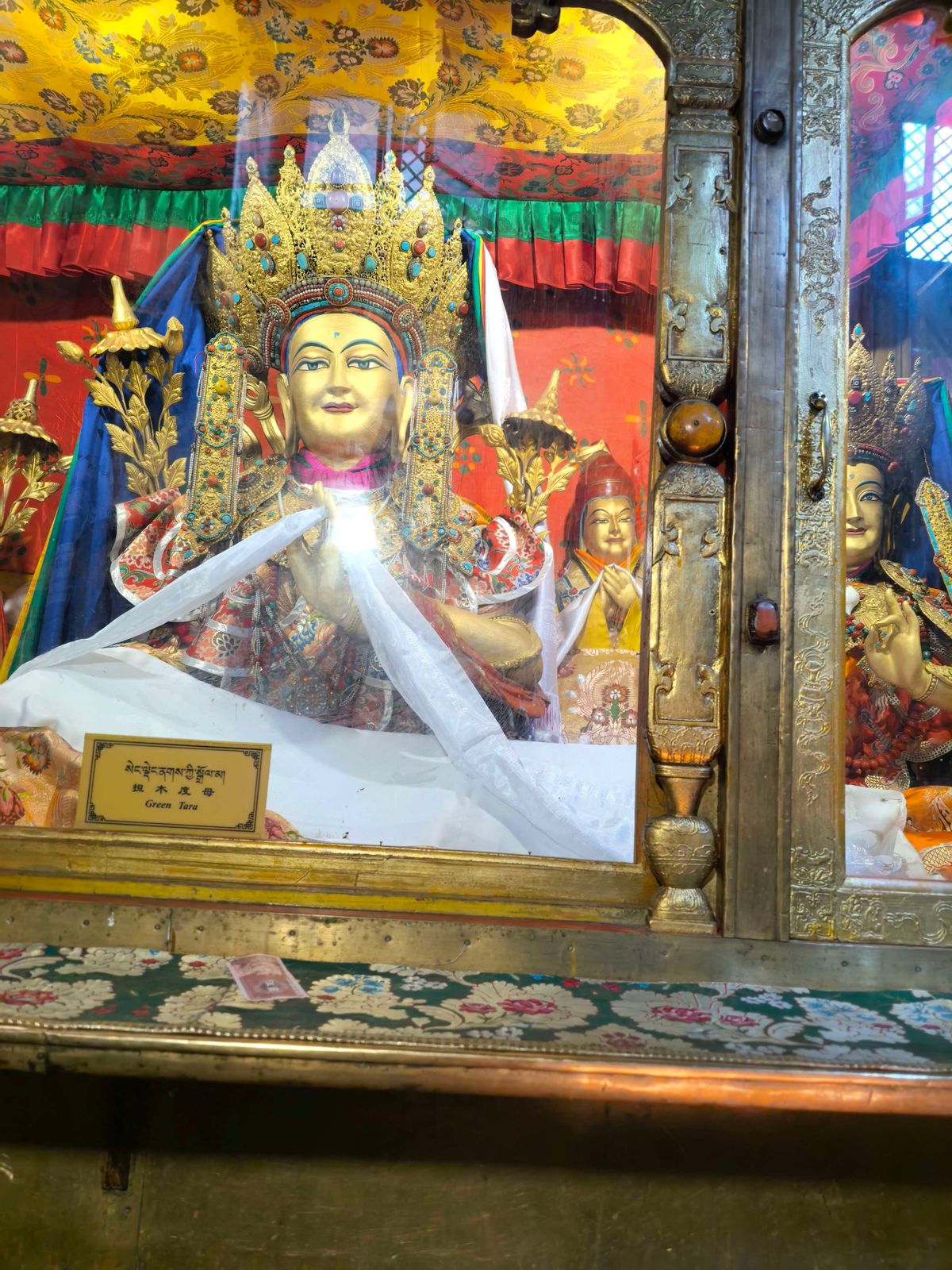
central Tara—the main Tara statue that, according to our tradition, was built by druthop  nyagnyon.


The other Tara statues, making up the traditional Twenty-One Taras, were created later. The central Tara is the original and most significant statue.

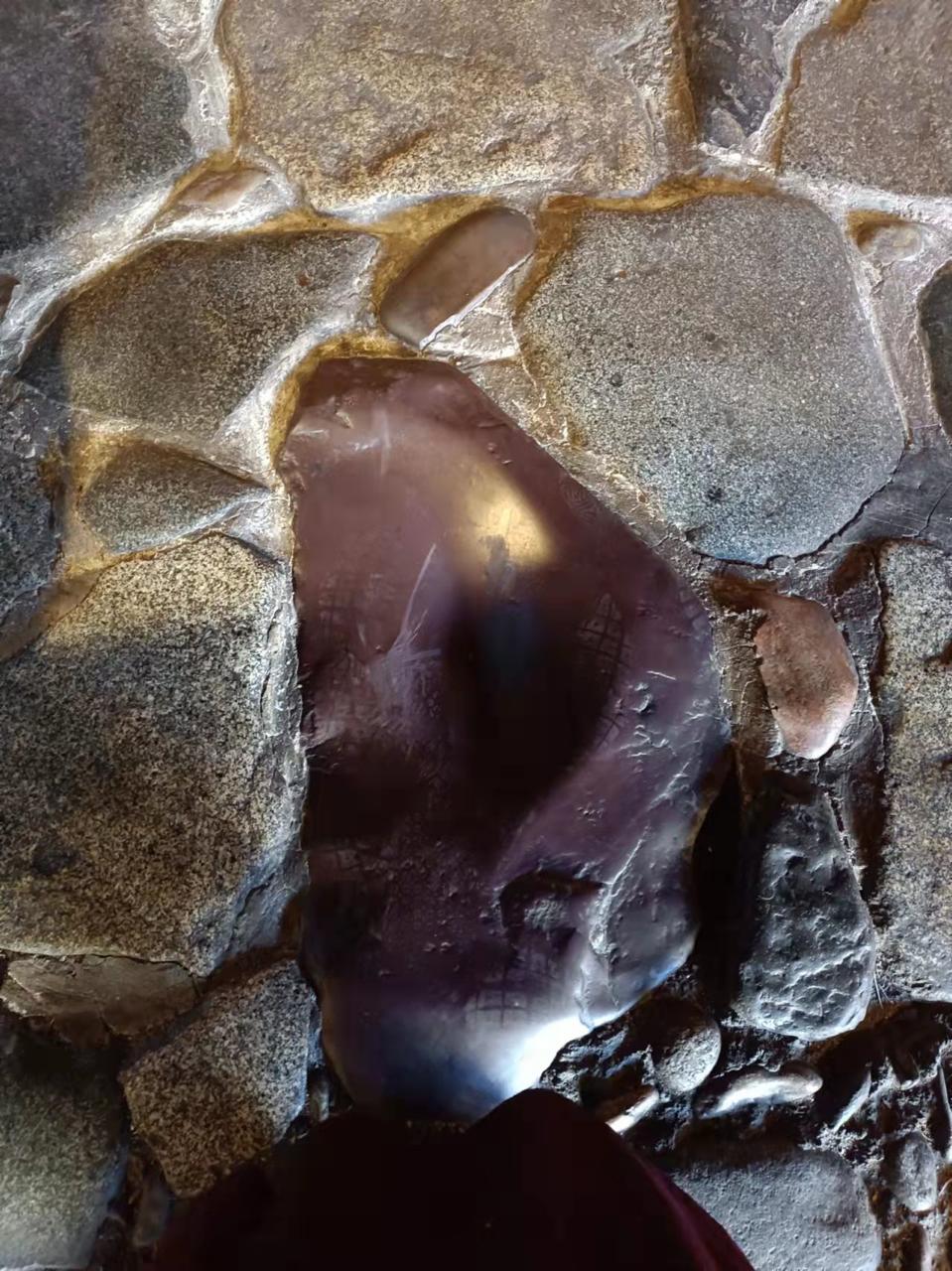
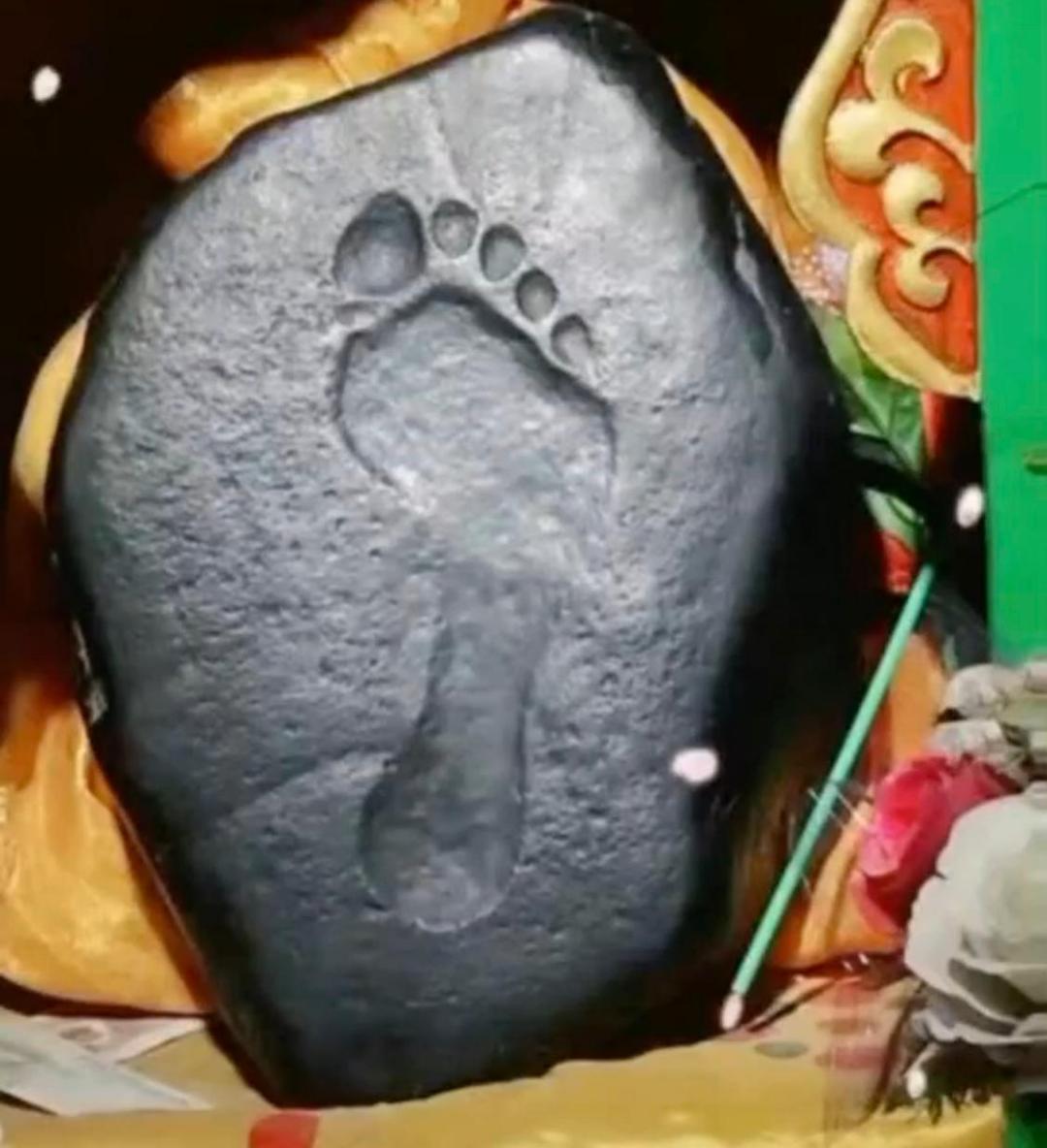
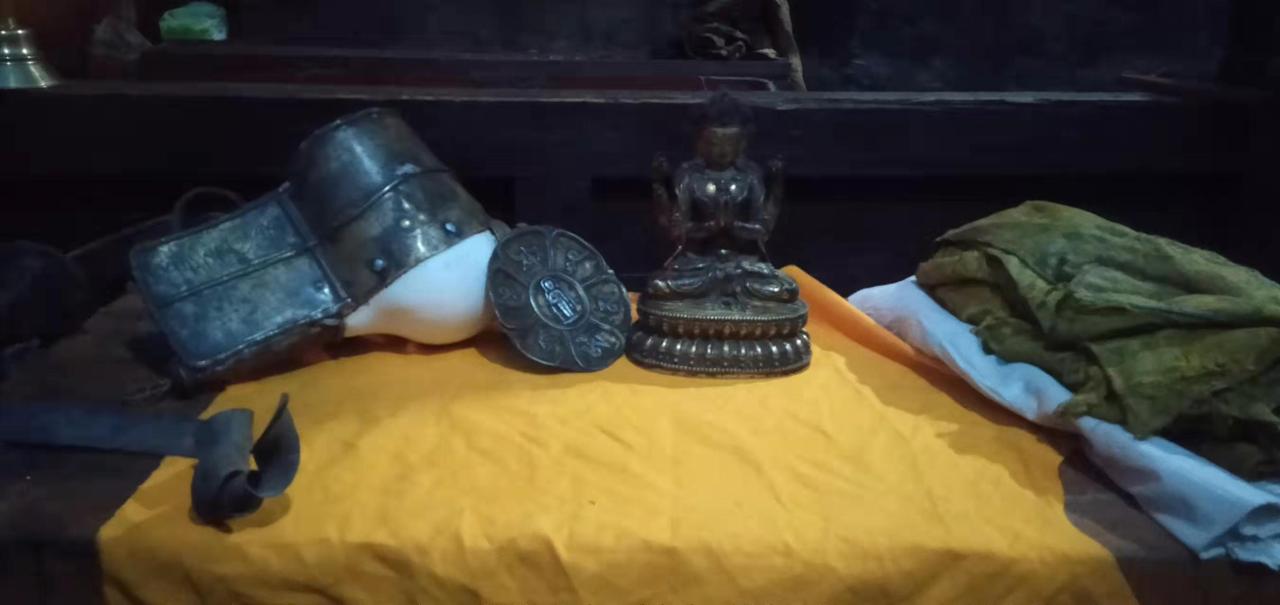
Inside the Jokhang Temple, Tibetan tradition also preserves the sacred Tara shrine (shown above) connected with Drubthob Lagon Nyagnyon. Pilgrims revere an ancient statue of the yogi, his wooden walking stick, the sculpting tools believed to have been used to create the image of Mother Tara, and his handprint and footprint, which generations have regarded as sacred reminders of his life and devotion.

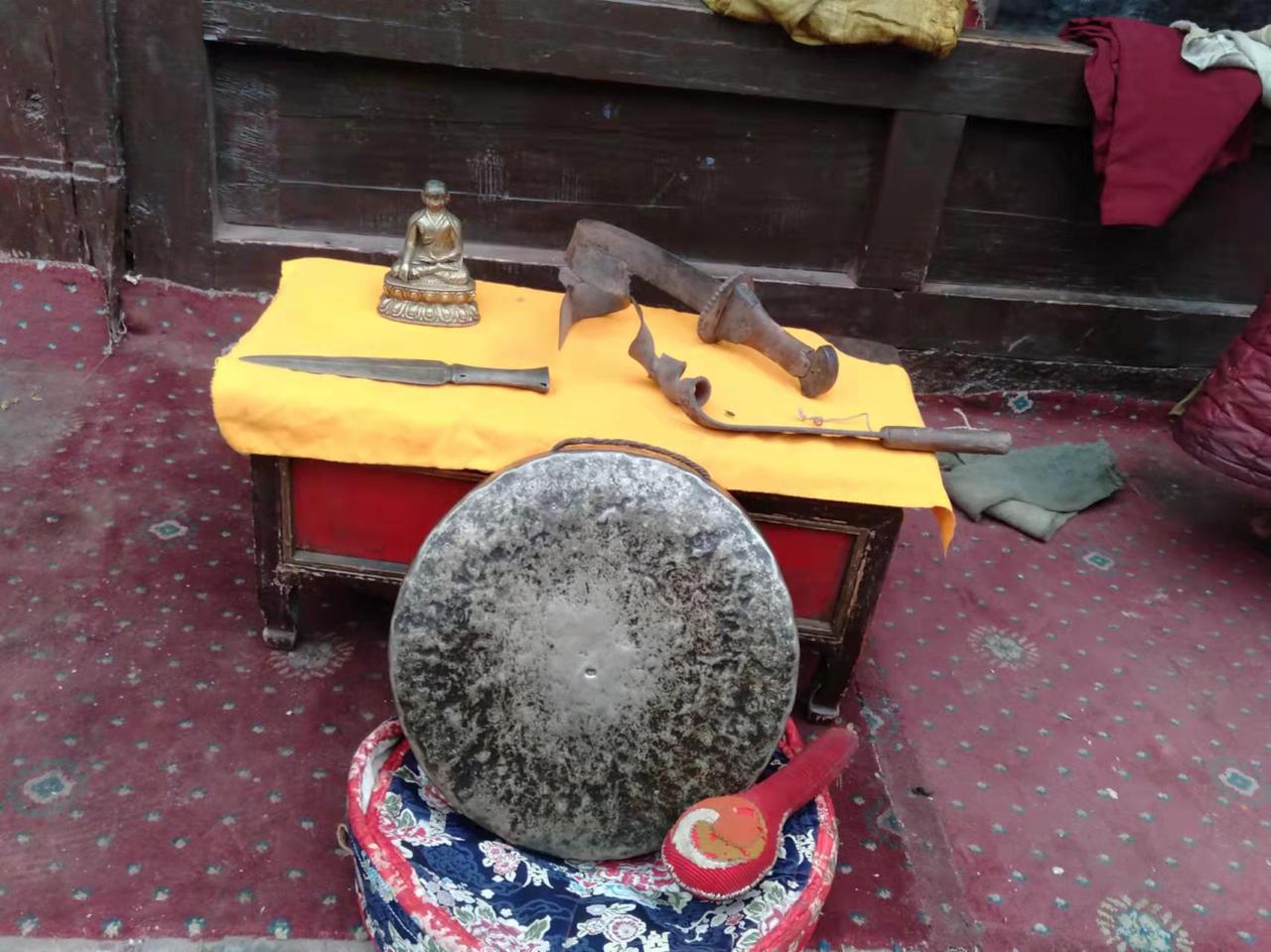
The temple also houses two ancient swords (shown above). According to Tibetan tradition, they were subdued through Drubthob Lagon Nyagnyon’s tantric powers during another extraordinary episode of his life.

Founded in the 7th century, Jokhang Temple remains the spiritual heart of Tibet. Every day, thousands of pilgrims from across the Tibetan plateau and beyond travel to this sacred place. Many make full-body prostrations along the streets of Lhasa before entering the temple to pay homage to Mother Tara and the sacred images preserved within.


For believers, Drubthob Lagon Nyagnyon’s story is more than an account of miraculous deeds. It is a story of unwavering faith, perseverance through hardship, and a promise kept.


As long as pilgrims continue to gather before the Tara shrine, the legacy of Drubthob Lagon Nyagnyon lives on.

“Based on traditional Tibetan Buddhist accounts preserved through oral history and religious lineage. Historical interpretations and details may vary among traditions and scholars.”

Lagon in Yushu and the Mountain Pilgrimage Site

Research into the Lagon lineage has also uncovered accounts connecting Lagon, known in these sources as Lagon Druthob Nyakre Sewo, with the Yushu region of Kham in eastern Tibet.

Thanggu Rinpoche, a respected Kagyu master, is said to have described Lagon Druthob Nyagre Sewa in his teachings or writings, including details about his family name, lineage, birthplace, and the mountain where he practiced meditation.

According to these accounts, the mountain is still regarded as a pilgrimage site today. An ancient cave where Lagon is said to have meditated is difficult to reach, but the mountain itself can be seen from a great distance.
 

Traditional stories also describe people witnessing Lagon miraculously travelling between mountains before disappearing into the cave, where he would remain in meditation for weeks at a time.
 

The continuing pilgrimage tradition provides another link between the historical accounts of Lagon and places that remain connected with his memory today.

4th Incarnation

The Fourth Lagon 1919–1961

The fourth Lagon was born in 1919 and died in 1961, at approximately 42 years of age. His life and death are remembered as an important part of the history of the Lagon lineage and of the suffering experienced in Tibet during this period.
 

According to the lineage tradition, when Chinese forces entered the Drayab/Kham region in 1959, Lagon felt he had a responsibility to protect his village, monks, nuns, and monastery. The local people and monastic community strongly resisted and were willing to risk their lives to protect him. To them, Lagon was not simply a monk or teacher, but their guru and spiritual master.
 

With very limited weapons and resources, the Tibetans developed their own methods of resistance. Villagers and monks would hide in the mountains above the advancing soldiers and throw or roll large rocks down toward them. Stories describe Lagon riding into battle on horseback, sometimes appearing in a wrathful form, carrying a large sword and fighting alongside the local people with great courage.
 

Tradition also preserves extraordinary accounts concerning Lagon himself. According to these stories, Chinese soldiers repeatedly fired at him, but the bullets could not penetrate his body. At the end of one day of fighting, when Lagon returned to the mountains, his Tibetan chupa was reportedly covered with dozens or even hundreds of bullet marks, with bullets lodged in or caught in the clothing, while his body remained unharmed.
 

These accounts are preserved as part of the oral and spiritual tradition surrounding the fourth Lagon and are presented here as traditional accounts rather than independently verified historical facts.

Despite their resistance, the Chinese military eventually had overwhelming numbers and resources. The difference became impossible to overcome. According to the story, the Chinese authorities eventually threatened to kill the entire community unless Lagon was surrendered.

Lagon realized that it was not right for one person — himself — to cause so many others to be killed. He therefore decided to sacrifice himself. The monks and villagers were guarding the front of the monastery and would not have allowed him to leave, so Lagon secretly went out through a rear entrance, attempting to surrender without anyone stopping him.
 

A policeman named Tenzin, who according to the tradition was Tibetan and working under the Chinese authorities, saw him and immediately raised his gun and shot Lagon in the head.

A Story of Forgiveness

Years later, when the current Lagon Tulku (5th incarnation) was living in South India, he learned that Tenzin was still alive and had become very old. Tenzin eventually sent him a message expressing deep regret for killing the fourth Lagon.

The fifth Lagon replied:
 

“I forgive you. It is okay. That is your karma, and you have to live with it, but I forgive you.”

A few weeks after the message was sent, Tenzin reportedly died peacefully.
 

For the Lagon lineage, this story represents more than the death of a spiritual master. It is remembered as a story of sacrifice, the suffering and destruction experienced by a Tibetan community, karma, forgiveness, and the continuation of the Lagon lineage from the fourth to the fifth Lagon.

5th Incarnation

Relics

The Meaning of the Name La Gon

La Gon and Le Gon are different English spellings of the same Tibetan name, with essentially the same pronunciation and meaning.

According to the lineage tradition, “La” refers to wages or earnings from work, while “Gon” refers to a monastery or temple. The name is connected to an event from Lagon’s early life.
 

Before becoming known by this name, Lagon travelled as a nomad, moving from place to place and helping people. At one point, he worked for a wealthy family caring for their animals and performing other tasks. Rather than keeping the wages he earned, he used them to build a temple.

Because he used his La (wages) to build a Gon (monastery or temple), people began calling him La Gon.
 

The story gives the name a deeper meaning, reflecting Lagon’s character and his commitment to using what he earned to benefit others and support spiritual practice.

bottom of page